
Pest risk management for construction and infrastructure.
Construction & Infrastructure[Sector 08 / 08]
On a live site the building envelope is the thing being built, welfare and waste move with the programme, and the ground itself is being opened. Pest risk here is not a housekeeping matter. It is a programme risk, a boundary risk, and frequently someone else's problem before it is yours.
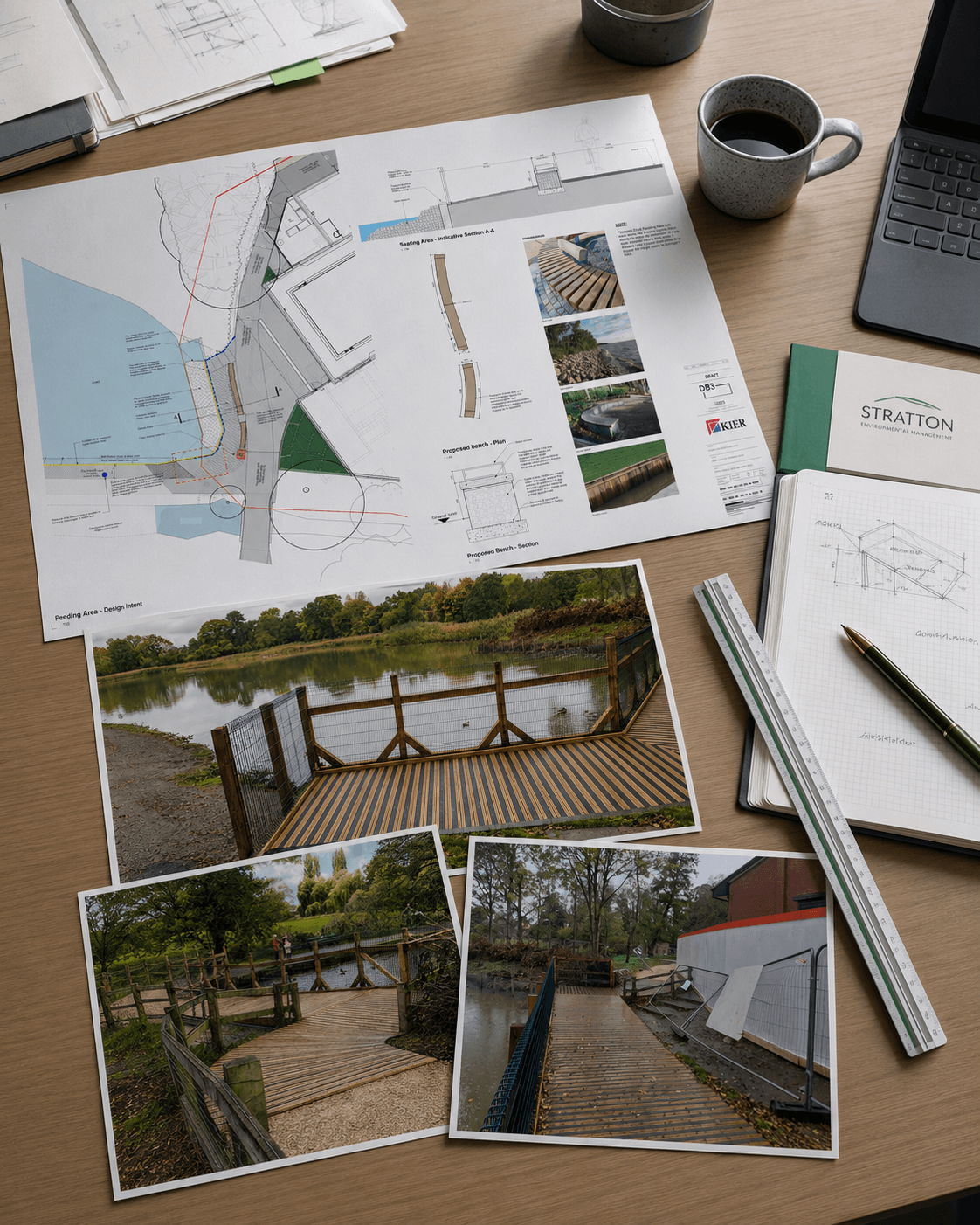
The stake
Breaking ground does not remove a population. It relocates it, usually next door.
01
What groundworks do to what is already living there.
Excavation, demolition and drainage work displace established rodent populations rather than ending them. Burrows are opened, sewer runs are broken into, and the harbourage a colony has used for years stops being available in a single afternoon.
That population goes somewhere. Usually it goes to the nearest stable food and shelter, which is the occupied premises on the other side of the hoarding. The first anyone hears of it is a complaint from a neighbour, an environmental health visit, or a claim, and by then the connection back to the works is obvious to everyone except the record.
A programme that starts before the ground is opened treats displacement as a predictable consequence of a known activity. Baseline the site and its boundary, anticipate where pressure will move, and the works stop generating liabilities they were never scoped to carry.
02
On a site with thirty contractors, pest risk belongs to nobody.
Welfare units, canteens, and waste compounds produce exactly the conditions a rodent population needs, in temporary arrangements that change location every few weeks. No single trade owns them, so an observation gets mentioned, noted somewhere, and lost between packages.
The duty does not move with it. It stays with the principal contractor, who is answerable for site conditions whether or not a subcontractor passed the information on.
Findings are therefore written to be actionable by the person who can act: named location, named condition, named owner, and a closure position that is either met or visibly outstanding.
- Welfare units, canteens and waste compounds reviewed as they move.
- Boundary and neighbouring occupiers assessed before groundworks.
- Findings routed to the contractor who owns the condition.
- Protected-species duties raised before they become a stop.
03
Protected species stop work. Knowing early is the whole job.
Badgers, bats, and nesting birds carry statutory protection, and encountering them mid-programme is not a pest problem. It is a legal one, with the power to halt an activity until the position is resolved properly.
Stratton's field biology capability is the reason this sits on the same programme rather than becoming an emergency call to a separate consultant. A survey that identifies a sett, a roost, or active nesting before the plant arrives costs a conversation. The same finding on the day costs the week.
Where a protected species is present, the route is documented: what was found, what the duty is, and what has to happen before work proceeds. Nothing here is treated informally, because nothing here can be.
04
Everything is cheaper to fix before handover.
The same finding costs very different amounts on either side of practical completion. While the site is still a site, there is plant on it, ground is already open, service voids and ceilings are still accessible, and the work sits inside a contingency that exists for exactly this kind of thing.
After handover it is a finished, occupied building. Access has to be arranged around an operator, finishes have to come up and go back, and what would have been a line in the programme becomes a defect, a liability conversation, or a retention argument. The technical problem has not changed. Everything around it has.
This is the whole argument for treating pest risk as a construction-phase activity rather than something the eventual occupier inherits. It is also why the baseline matters: a condition identified before the ground is opened is the cheapest it will ever be to resolve.
05
A record the building can be handed over with.
Infrastructure and major build programmes are reviewed long after practical completion. What the client's team eventually holds is the documentation, and a pest position that was managed but never evidenced reads exactly like one that was ignored.
The programme produces a continuous record across the phases: what the site condition was at baseline, what changed as the works progressed, what was raised, and what was closed. It is written to be read by an employer's agent, not only by the site team who were there.
What a programme delivers
A record built for this sector.
A baseline site and boundary assessment
Before the ground is opened, not after the neighbours call.
A structured report per visit
Written against the phase the site is actually in.
A maintained corrective action register
Routed to the contractor who owns the condition, and tracked to closure.
Protected-species observations
Raised early, with the statutory duty named.
A continuous record to handover
Organised for review after practical completion.
On a site that changes shape every few weeks, fixed monitoring is justified point by point and moved when the site moves. A station left where the building used to be is evidence of nothing.
Framework alignment
Structured around recognised documentation expectations.
Stratton structures its evidence around recognised documentation expectations. It supports the documentation and evidence these frameworks typically require. It does not claim certification to them on your behalf, and SEPOS is a proprietary operating standard, not an accreditation.
- 01CDM 2015 welfare provisions
- 02Wildlife & Countryside Act 1981 duties
- 03Protection of Badgers Act 1992
- 04Conservation of Habitats and Species Regulations 2017
- 05CRRU-conscious stewardship
Stratton Pulse
Across a portfolio, Stratton Pulse holds the record in one place: what was found on each site, which actions are open, and what has been closed. Access is issued by Stratton to named users.
Related
Start with a site review.
A site review assesses the risk on your site, the documentation it should produce, and the programme structure that would suit it. You receive a written summary and a recommended route. Following the review, Stratton will recommend a suitable route, or advise clearly where the site is not the right fit.