SEPOS
Pest-risk operating standard[05 stages · 06 steps]
SEPOS sets how Stratton inspects, records, recommends, assigns, verifies and reviews pest risk on a commercial site. It is the reason two different technicians leave the same quality of record.
Most pest control proves that someone attended.
We think that is the least interesting thing a record can show.
Most pest contracts are built around the visit. SEPOS is built around the outcome.
- Steps, on every visit
- 06
- Stages, in every programme
- 05
- Standard of record, whoever attends
- 01
The same site, run two ways
Twelve clean reports. Not a finding between them.
A perfect record, as it happens, of everywhere nobody looked. A clean report and a controlled site look identical on paper; the difference appears the moment an auditor asks what changed.
| Question | The monthly visit | SEPOS |
|---|---|---|
| 01What starts the work | A sighting, treated as the beginning of the problem. | The building, read for pressure, access and harbourage before anything appears. |
| 02What the visit produces | A treatment, and a report of the activity found. | A treatment, and the failure that allowed it, named in writing. |
| 03What closes it | The activity stopping. The opportunity that created it stays where it is. | Proofing and corrective action, tracked to closure and signed off. |
| 04What the record shows | A file assembled once the question has been asked. | A record built as the work happened, every open action dated and visible. |
| 05Who it depends on | Whichever technician attended that month. | The standard. Two different technicians leave the same quality of record. |
Every visit
From inspection to verified closure.
- 01InspectInspect the site against its risk profile, monitoring plan and current operating conditions.
- 02RecordCreate a dated service record covering findings, activity and material observations.
- 03RecommendState what needs to change, why it matters and the priority attached to it.
- 04AssignPlace the required action with the appropriate responsible party and agreed timeframe.
- 05VerifyCheck completed work and retain the evidence supporting closure.
- 06ReviewUse the accumulated record to adjust monitoring, priorities and the next period of control.
A method that carries the work through.
01 / 05
Research
Establish the site’s true position. Inspect the building and its surroundings, review activity history, assess existing equipment and identify the gaps in the current arrangements.
02 / 05
Consultation
Work with technical, hygiene, engineering and operational teams to understand the site’s constraints, responsibilities and standards. A recommendation is only useful if the people responsible can act on it.

03 / 05
Design
Build a proportionate programme for inspection, prevention, monitoring, proofing, response and escalation. Each measure is tied to a risk it is intended to control.
04 / 05
Implementation
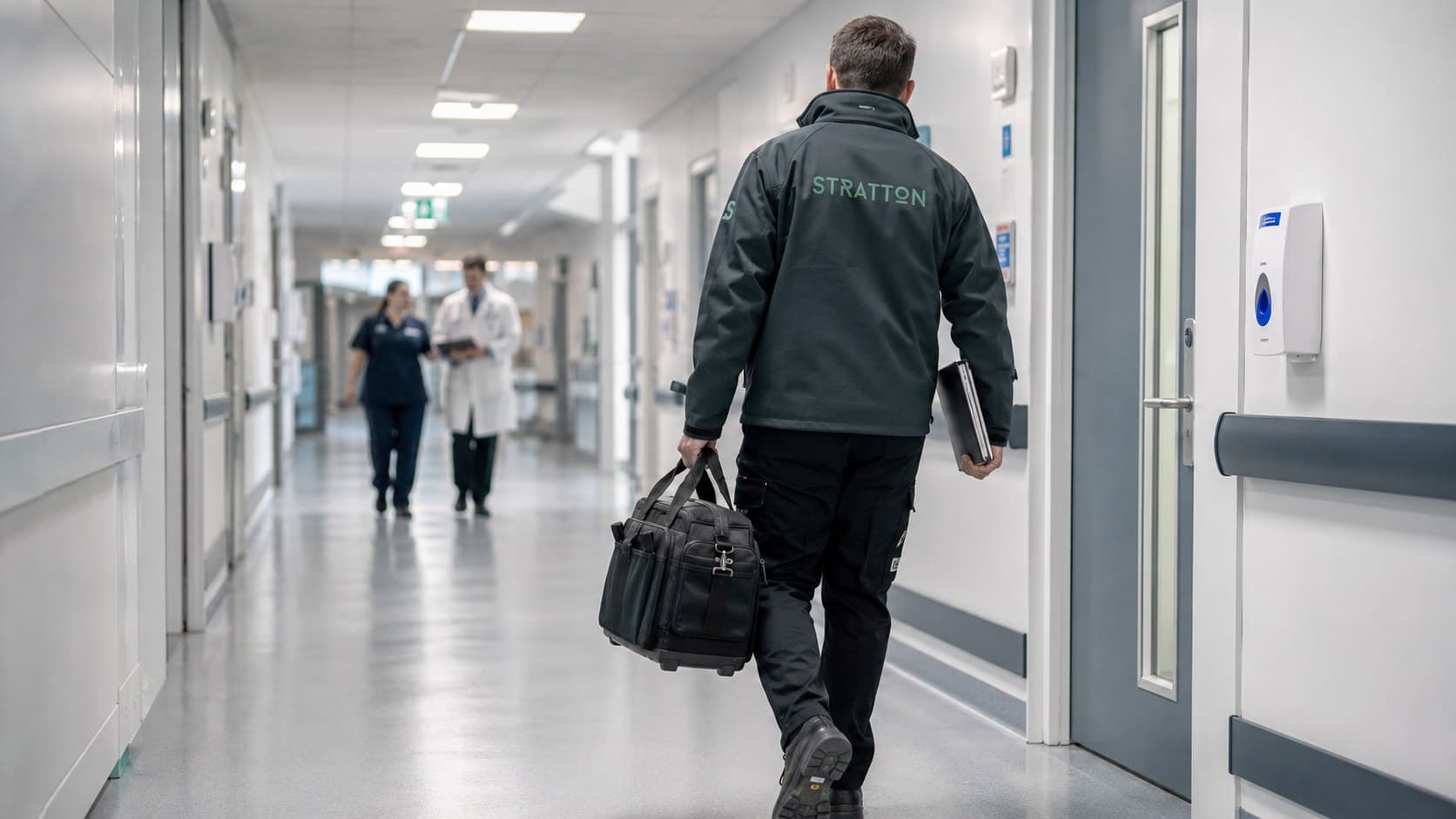
Put the plan to work. Inspect, monitor, intervene where justified, document findings and assign corrective action. The field work and the record develop together.
05 / 05
Review
Verify completed actions, interpret trends and reassess the site as conditions change. The programme improves with what the site teaches us.

Where monitoring helps
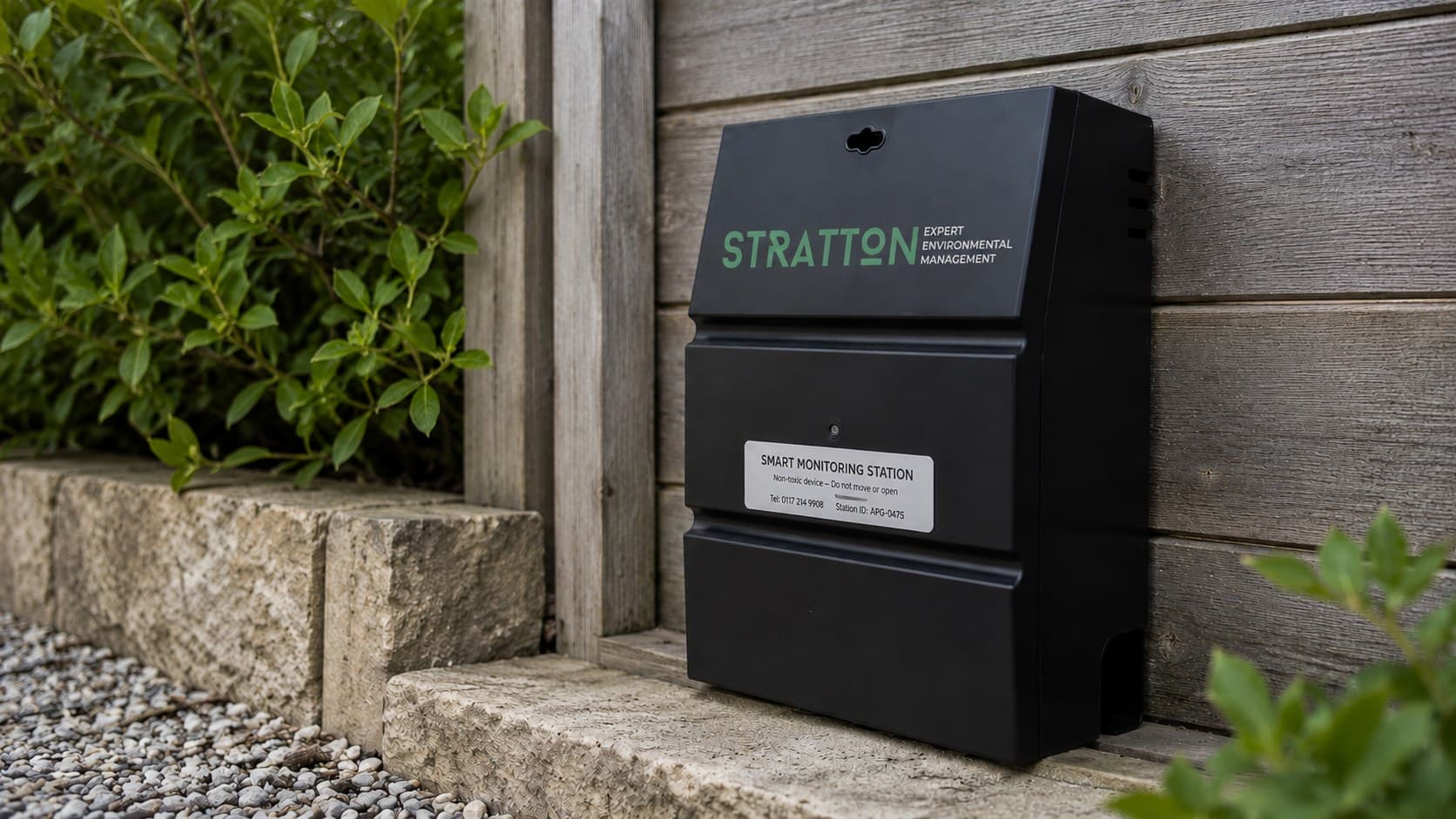
The technology is useful. The discipline is what makes it valuable.
What you are left holding.
A programme built around your site
Inspection frequency, monitoring points and escalation routes set against the actual risk, not a standard template.
Corrective action carried to closure
Findings owned, prioritised and followed until the pressure is resolved, rather than noted and left.
Documentation your auditors can rely on
Organised for the regime your environment answers to, ready when it is asked for.
SEPOS defines how the work is done.
Stratton Pulse shows what the work has found, what remains open, and what can be evidenced.
“The reporting gives us a proper record of risk, action, and progress, rather than a folder of disconnected service notes.”
See SEPOS applied to your site.
A site review brings the standard to your environment and leaves you with a written summary of what we find.