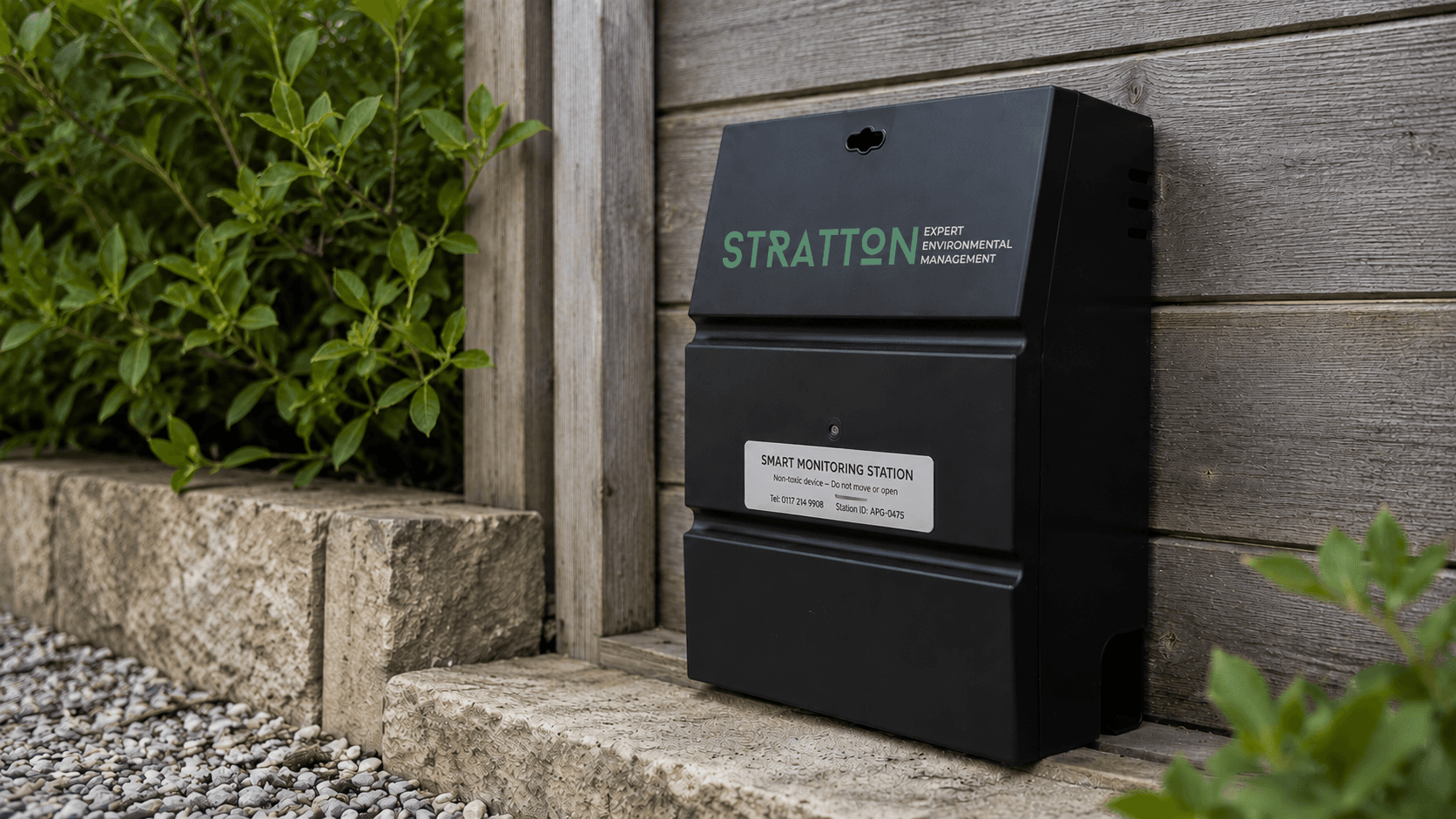
Smart monitoring, interpreted with discipline.
Smart Monitoring[Service 02 / 07]
A sensor signal is not a management decision. It becomes valuable when verified, interpreted, and converted into action.
Who this is for
Built for a specific kind of site.
- 01High-consequence ingress points that justify continuous attention.
- 02Areas where frequent physical inspection is impractical or disruptive.
- 03Locations with a history that warrants earlier visibility than a scheduled visit gives.
Method
Connected monitoring used where it changes a decision, then verified, interpreted, and recorded.
01
What remote pest monitoring does, and what it does not.
Connected monitoring, also sold as remote or digital pest monitoring, registers activity at a fixed point between visits, earlier than a scheduled inspection would catch it. That is genuinely useful at the right points.
What it does not do is interpret itself. A stream of unread registrations is not visibility; it is a liability with a subscription fee. The value is in what happens after the signal.
02
From sensor signal to corrective action.
Stratton runs each registration through a defined sequence rather than treating the reading as the conclusion.
- A device registers activity at a monitored point.
- A technician verifies and contextualises it on site.
- The trend is reviewed, not the single reading.
- A corrective action is assigned, with an owner and a priority.
- The report, register, and trend are updated to reflect it.
03
Where a monitoring device is justified, and where it is not.
Devices are placed where a reading changes something. The test for any proposed unit is simple: if this registers tonight, what changes tomorrow? Where there is no concrete answer, the money is better spent on inspection or proofing.

From signal to record
A sensor event is not the answer.
From equipment to review
The device sees activity. Stratton decides what it means.
- 01Equipment placedMonitoring sited where it gives useful early warning.
- 02Activity eventA device registers activity at a high-risk point.
- 03InterpretationA technician reads it, not the device.
- 04Site contextWeighed against history, species, and season.
- 05Action raisedA corrective action, with owner and priority.
- 06Record updatedReport, register, and trend updated.
- 07ReviewTrend reviewed and retained for audit.
Governed by SEPOS.
Every component of this service runs through the same operating standard: inspect, record, recommend, assign, verify, review. That is what turns the work into a record rather than a sequence of visits.
What you receive
What you are left holding.
A justified placement plan
Each device tied to a risk and an action.
Verified activity records
Signals confirmed and contextualised on site.
Trend interpretation
Movement read against history, season, and species.
Action and reporting integration
Findings carried into the SEPOS record.
Related
Start with a site review.
A site review establishes the risk profile, the documentation required, and the programme structure that would be appropriate. Stratton will recommend a suitable route, or advise clearly where the site is not the right fit.